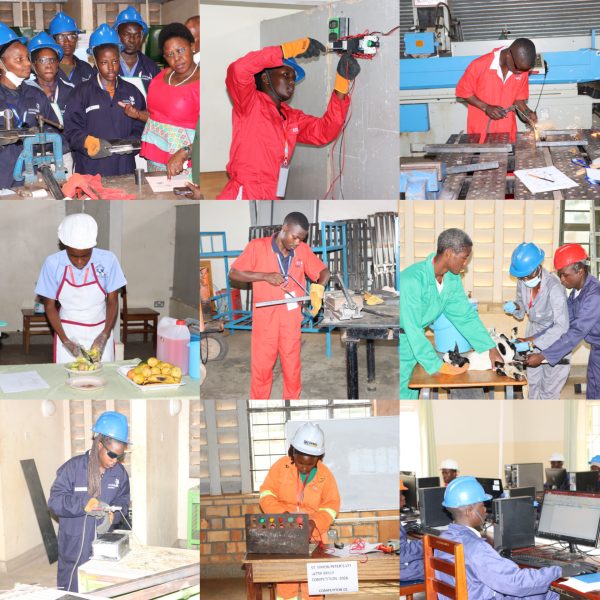


WorldSkills Uganda has convened a stakeholders’ meeting bringing together Technical Vocational Education and Training (TVET) institutions and industry partners from across Central Region, in a bid to enhance skills development and strengthen the delivery of TVET in the region.
The meeting reflects WorldSkills Uganda commitment to ensuring that every region has the structures needed to produce skilled, job-ready youth.
Speaking during the meeting, Education and Skills Development Expert Ham Wilson Lukurwe said the gathering underscored a long-standing gap in how TVET is perceived and valued within Uganda’s broader education system.
“The challenge is clear: raising the standards and recognition of TVET as a critical pathway to employment,” Lukurwe said.
His remarks point to a wider national conversation about the place of vocational training in addressing shortage of labor market needed skills and youth unemployment.

TVET has increasingly been put forward as that route. Studies indicate that TVET graduates outperform university graduates in practical, job-ready skills.
Experts say that vocational training deserves greater recognition and funding rather than being treated as a fallback option for learners who do not progress to university.
Stakeholders at the Central Region meeting also pointed to the role of skills training in entrepreneurship, not just employment.
Graduates trained in trades such as welding, construction, automotive mechanics, ICT and electrical installation among others are increasingly starting their own businesses and training others, with skills-based enterprises ranking among the fastest-growing sectors for young entrepreneurs.
The coordination between TVET providers and employers is key to ensuring that graduates leaving institutions are matched to the skills the labour market actually demands.