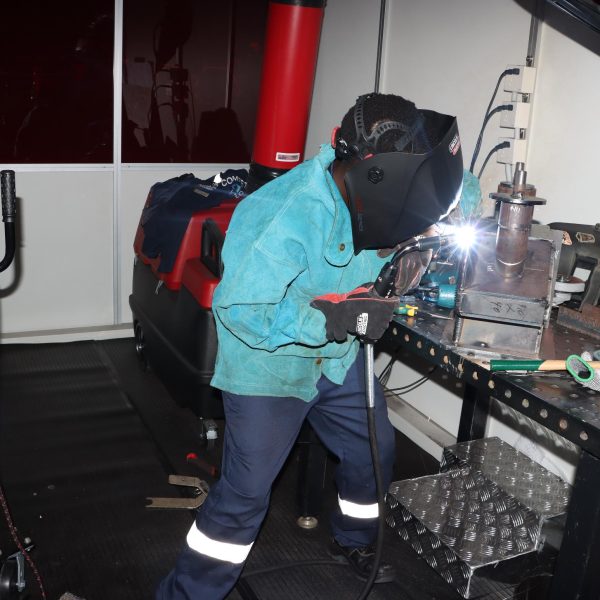

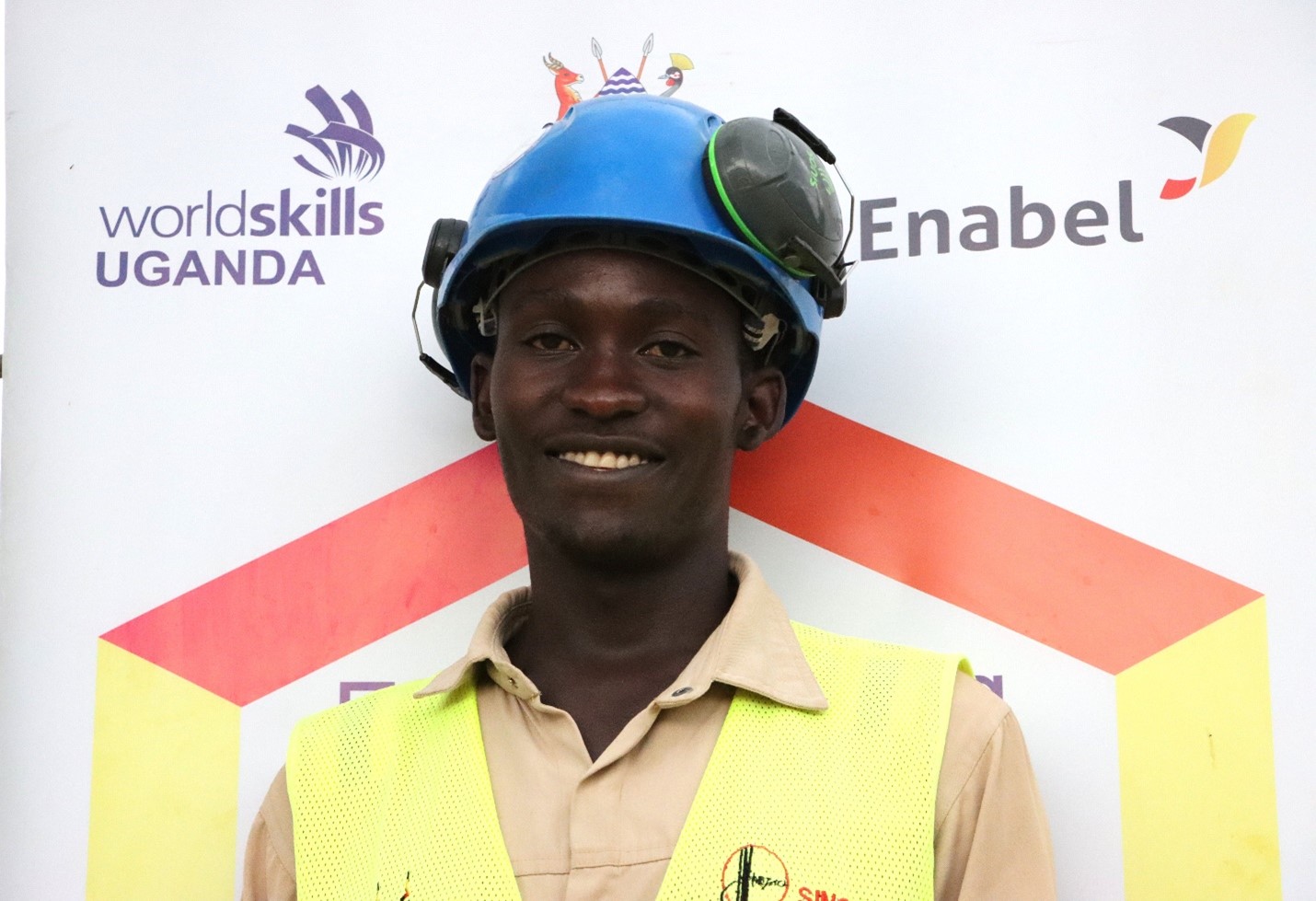
Technical and Vocational Education and Training (TVET) is increasingly proving that it is the most effective pathway to employment, practical skills, and opportunities to drive economic transformation. A good example of this is WorldSkills Champion Tonny Mugisa who competed at the 47th WorldSkills International Competition in Lyon, France in 2024.
Today, Mugisa works on Uganda’s multi-billion dollar Tilenga oil project — a career trajectory he says is direct proof that Technical and Vocational Education and Training is a powerful and rewarding pathway that young Ugandans should stop overlooking.
“TVET is not a second choice — it is a powerful pathway to success,” Mugisa said. “Skilled hands build nations, and your skills can shape your future.”
Mugisa’s story is the kind the government and skills development advocates have struggled to tell convincingly. Uganda’s Technical and Vocational Education and Training sector has long battled a perception problem — seen by many families as a fallback for students who could not make it to university, rather than a deliberate and rewarding career path. Mugisa’s experience punches a hole in that narrative.

He says competing at WorldSkills Lyon 2024 fundamentally changed how he understood his own education. “Before the competition, I saw TVET mainly as a pathway to employment,” he said. “Through WorldSkills, I realized that technical and vocational education represents excellence, innovation, and global competitiveness.”
What he witnessed in Lyon — skilled professionals from across the world applying precision, creativity, and advanced technology to solve real-world problems — convinced him that technical skills are not subordinate to academic qualifications. “Skills are not second to academic education. They are powerful drivers of economic growth, industry advancement, and national development,” he said.
The competition itself was a crucible. Mugisa says the pressure of performing to international standards sharpened skills he now applies daily on the Tilenga Oil project — precision, time management, the ability to stay composed under pressure, and a problem-solving mindset that kicks in when conditions on the ground change without warning.
“The competition required accuracy and high-quality standards, which trained me to focus on doing every task correctly rather than rushing to finish,” he said.
He is equally direct about the professional doors that competing at that level has opened. Employers, he says, recognise the discipline and competence that WorldSkills participation signals. His professional network now stretches across borders, connecting him with industry experts, trainers, and fellow competitors from different countries — relationships he says continue to expose him to new ideas and best practices.
But it is his message to young Ugandans that carries the sharpest edge. At a time when youth unemployment remains one of the country’s biggest challenges, Mugisa argues that TVET is not just a personal opportunity — it is a national necessity.
“Skills development and TVET can play a major role in addressing youth unemployment in Uganda by equipping young people with practical, employable competencies that match the needs of the labour market,” he said. “Investing in TVET is investing in Uganda’s future.”
To those who still view vocational training as inferior to general education, Mugisa is unequivocal. “I respectfully disagree,” he said. “Skilled professionals build roads, design systems, maintain machinery, develop technology, and support industries that keep the economy running. These are not secondary roles — they are essential roles.”
He now sees himself as an ambassador, with a responsibility to use his story to draw more young Ugandans toward skills training. He is also calling on WorldSkills and its partners to do more to sustain that effort — through structured alumni networks, career development support, entrepreneurship guidance, and by involving former competitors in mentoring the next generation of skilled professionals.
“By being a positive example, I can help empower more young Ugandans to build successful futures through skills,” he said.
For a country sitting on an oil boom that demand armies of technically trained workers, Mugisa’s journey from TVET to the Tilenga project is not just a personal success story. It is a wakeup call for young people to embrace TVET.