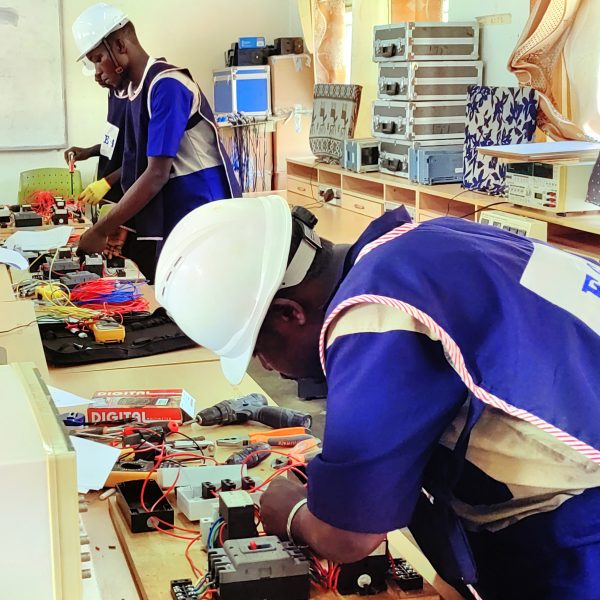


Education experts, government officials, and development partners have rallied young people to embrace technical and vocational education as a gateway to employment, innovation, and national development.
Speaking during the vocational skills fair and competitions at Lugogo Vocational Training Institute over the weekend, experts stressed that vocational skills are no longer a fallback option but a powerful driver of economic transformation and self-reliance.
The vocational skills fair and competitions served as a platform for young people to showcase their technical and vocational skills in different trades including electrical installation, building construction and carpentry.

Experts said that the competitions were not only a platform for skills demonstration but also an effort to shift long-standing mindsets about the value of technical and vocational education.
Ham Wilson Lukurwe, an expert on education and skills development said that the event underscored the growing recognition that vocational careers are central to Uganda’s economic future.
“We have seen that technical education is not just a fallback option; it is a powerful pathway to employment. It is also a way of enhancing innovation,” Lukurwe said.

He noted that the innovations exhibited challenged negative perceptions that have long discouraged young people from enrolling in vocational institutions.
“Through these innovations, we have challenged stereotypes and indicated that TVET (Technical Vocational Education and Training) is the right pathway. When you pursue TVET, you are on the right career path,” he added.
The vocational skills fair and competitions held under the theme “choose vocational education; get skilled and be unstoppable,” were facilitated by Enabel, a Belgian Development Agency.

Innocent Kemigisha Mukooli, Senior TVET Officer at the Ministry of Education and Sports urged Ugandans to discard the notion that vocational training is reserved for academic failures.
“TVET is something that can give you skills, and it is something that can make you unstoppable. Look at all developed countries; Japan, Belgium, USA, South Korea etc; they have all embraced TVET. We must change our perceptions about TVET. I want to emphasize that TVET is not for failures,” she said.
She added that the major infrastructure projects around the world demonstrate the critical role of vocational skills in national development.
“Who build the big roads that we see, the skyscrapers? The masons that build that kind of infrastructure are products of TVET,” she said.

Emmanuel Kisangala, project manager for the We Work project at Enabel, said that embracing vocational careers is essential not only for job creation but also for innovation and sustainability in a rapidly changing world.
“TVET is a powerful practical pathway to employment, dignity, innovation, and economic progress yet we know that misconceptions, stereotypes and gender bias still discourage many young people from enrolling in vocational training. As a result, our economy misses on talent, and young people miss out on opportunities that they deserve,” he said.
Kisangala noted that skills competitions are helping rebuild public confidence in vocational careers and encouraging young people to pursue pathways that lead to self-reliance.

He reminded parents and guardians that the country urgently needs skilled people to support emerging sectors such as renewable energy and the green economy.
“The world is changing, and Uganda needs competent plumbers, electricians, metal fabricators, carpenters, renewable energy technicians, builders, and innovators. We need youth who are ready to shape the solutions of the green economy, drive entrepreneurship and take on decent jobs across this country. We are promoting technical excellence and unlocking pathways to decent work for Ugandan youth. To parents and guardians, encourage your sons and daughters to learn a skill,” he said.