


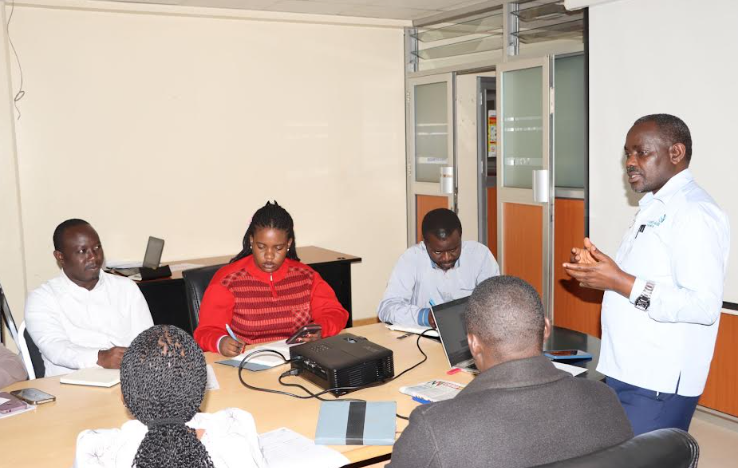
WorldSkills Uganda has convened a stakeholders’ meeting bringing together public and private Technical and Vocational Education and Training (TVET) institutions and industry partners from across Central Region, in a strategic push to advance skills development and lay the groundwork for the forthcoming Central Region Skills Competitions.
The engagement forms part of the broader effort to reposition TVET as a powerful pathway to youth employment and entrepreneurship.
This comes at a time when Uganda continues to grapple with persistent mismatch between the skills possessed by young people and the demands of the job market.
COMPETITIONS AS A TESTING GROUND FOR INDUSTRY-READY SKILLS
At the centre of the discussions was the role of skills competitions in preparing young people for the world of work. Unlike conventional academic assessments, participants in these competitions are not simply measured against one another; rather, they are evaluated against defined industry standards, replicating the pressure, precision and expectations of real workplace environments.

This distinction is significant. By benchmarking competitors against the standards that employers demand, the competitions give young people, trainers and institutions an honest picture of where their skills stand relative to what industry requires — and where the gaps lie. For a country working to close its skills gap, this kind of structured, standards-based feedback is invaluable. It shifts the conversation from theoretical qualifications to demonstrable competence, which is increasingly what employers say they are looking for when recruiting.
INDUSTRY AT THE CENTRE, NOT ON THE SIDELINES
The private sector involvement in the competitions was underscored as a deliberate and central design feature, not an afterthought. Industry remains the single largest absorber of graduates channelled out of TVET institutions, making its direct participation in shaping, judging and mentoring through the competitions essential to ensuring that training remains relevant to actual job-market needs.
When industry players sit at the table during skills competitions — setting benchmarks, observing performance and identifying talent — the process doubles as a live recruitment and talent-scouting pipeline. Employers get early visibility into a new generation of skilled workers, while trainees gain direct exposure to the professionals and companies most likely to employ them. This kind of structured interface between training institutions and the private sector is what WorldSkills is aiming to build.
A PROGRESSIVE PATHWAY, FROM THE SCHOOL TO THE WORLD STAGE
Skills competitions under the WorldSkills model are structured progressively, beginning at school and institutional level before advancing through regional, national and ultimately international competitions. This tiered structure means that a student’s journey does not end with a single contest; it offers a continuous ladder of achievement, exposure and motivation.
For young competitors, each stage builds confidence and technical depth, while also creating visibility for standout talent that can be nurtured further. The Central Region Skills Competitions being planned through this stakeholders’ engagement therefore represent more than a one-off event — they are a stepping stone within a much larger national and international system designed to identify, develop and showcase Uganda’s best vocational talent.
POSITIONING TVET AS A POWERFUL PATHWAY TO EMPLOYMENT AND ENTREPRENEURSHIP
Perhaps the most significant thread running through the stakeholders’ meeting was the role of skills competitions in changing public perception of TVET itself. In many parts of Uganda and the wider region, vocational training has historically been viewed as a fallback option for students who do not perform well academically, rather than a deliberate and viable career choice.

Skills competitions actively challenge that narrative. By putting vocational excellence on public display — showcasing welders, electricians, hairdressers, ICT technicians, carpenters, fashion designers and other tradespeople competing at a high level — the competitions demonstrate that TVET pathways can lead to dignified, well-paying and often self-directed careers.
Crucially, the competitions do not only prepare young people for employment; they also equip them for entrepreneurship. Many TVET trades — tailoring, welding, plumbing, catering, beauty therapy, motor vehicle repair, among others — lend themselves naturally to self-employment. A competitor who sharpens their craft to a competitive standard is not only more employable but also better positioned to set up and run a viable small enterprise, contributing to job creation rather than simply seeking a job.
SHARPENING HANDS-ON SKILLS FOR A COMPETITIVE LABOUR MARKET
Ultimately, the value of skills competitions lies in their ability to sharpen the practical, hands-on capabilities that distinguish a merely trained worker from a genuinely skilled one. In hands-on trades, the difference between competence and excellence is often what determines whether a young person is hired, retained, promoted — or whether their own business succeeds or struggles.

By pushing competitors to refine their technique under competitive, standards-based conditions, the competitions strengthen the very qualities employers repeatedly cite as lacking in many job-seekers: precision, efficiency, problem-solving and consistent quality of output. For young people navigating an increasingly competitive labour market, this sharpened skill set represents a tangible advantage — whether their next step is securing formal employment or launching an enterprise of their own.
As WorldSkills Uganda and its partners move from this stakeholders’ meeting towards the actual conduct of the Central Region Skills Competitions, the initiative stands as a concrete demonstration of how coordinated action between TVET institutions, industry and skills development bodies can translate into real opportunity for Uganda’s young people — turning technical training into a genuine engine of employment and entrepreneurship.